You might have seen the round marks on an athlete’s back and wondered what caused them. Or maybe you’ve heard someone say, “It looked intense, but it felt incredible.” Most of the time, they’re describing cupping therapy.
Even though cupping therapy has become popular in recovery and wellness clinics, it still raises a lot of questions. Does it hurt? Why do the marks appear? What is the difference between standard cupping and hot cupping? And if you are searching cupping therapy near me or cupping near me, how do you choose a provider who delivers a safe, professional cupping therapy treatment?
Cupping at Body & Mind Osteopathic Clinic
This guide breaks it down clearly. You’ll learn what cupping therapy is, how suction therapy works, what a session typically looks like, and how massage and cupping can be combined in a way that feels supportive rather than overwhelming.
If you are exploring options at Body & Mind Osteopathic Clinic, you can start by reviewing their approach to Therapeutic Massage and how it fits into a personalized care plan.
Massage or Cupping?
Most people do not book bodywork because everything feels perfect. They book because something feels stuck. Tight shoulders that never drop. A back that feels stiff even after stretching. Hips that feel locked after long workdays. Sometimes it’s not sharp pain, but a constant sense of tension that makes the body feel heavy and tired.
This is one reason massage and cupping can work so well together. Massage helps warm and soften tissue. Cupping adds a different kind of input by using suction therapy to gently lift tissue rather than pushing down. For many clients, that lifting sensation can help areas that feel stubborn finally feel less restricted.
What Is Cupping Therapy?
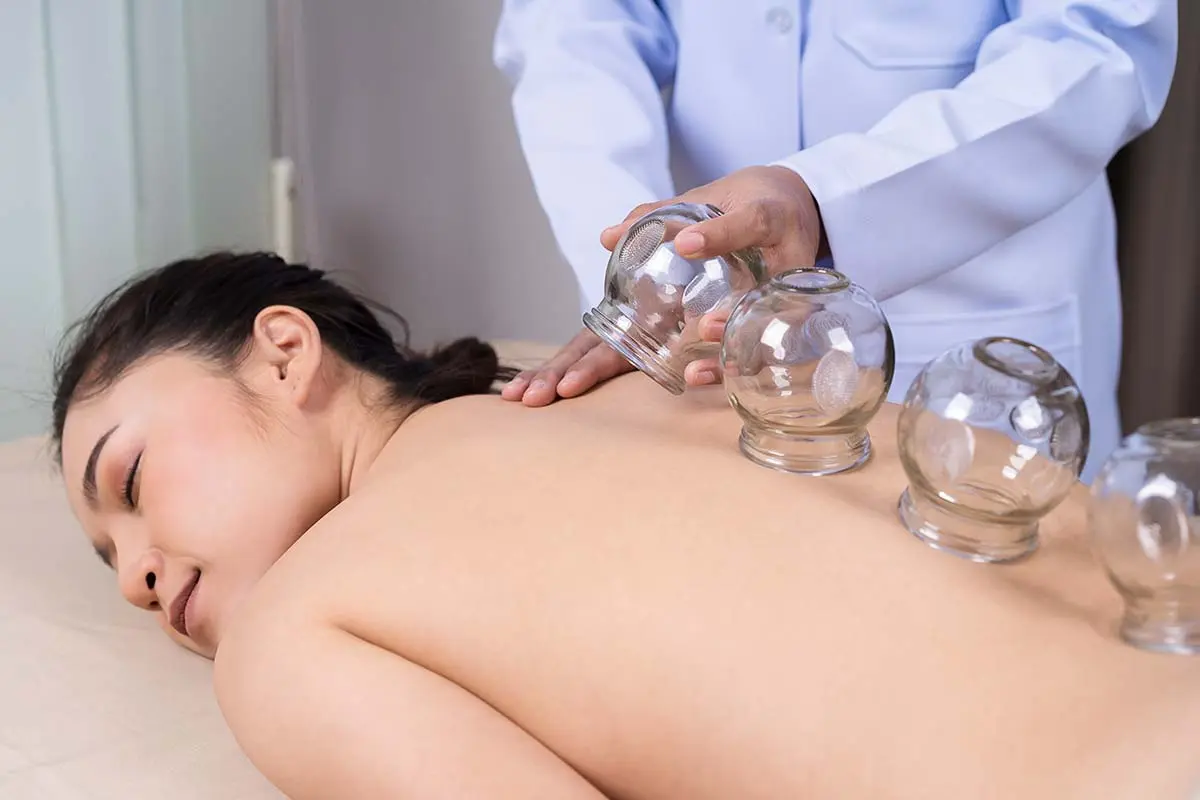
First, cupping therapy is a technique where specialized cupping cups are placed on the skin to create suction. Depending on your comfort level, the area being treated, and the session goal, the suction can be mild or strong.
By contrast to massage, which applies pressure downward into the body, suction therapy gently pulls the skin and superficial tissue upward. As a result, cupping feels distinct, and for some people it’s preferable for certain types of tension.
Additionally, cups can be made of silicone, plastic, or glass. Ultimately, the method used depends on the practitioner’s training and the style of cupping massage being performed.
How suction is created
Pump suction
Some cups use a small hand pump to remove air and create controlled suction.
Silicone suction
Soft silicone cups are squeezed and released. This is commonly used for moving or gliding cupping massage.
Heat suction
In hot cupping, a glass cup is briefly warmed so that when it is placed on the skin, suction forms as the air inside cools.
According to the National Center for Complementary and Integrative Health, suction can be created using heat or a suction device, and cupping is practiced in different regions and traditions.
How Suction Therapy Works
Your body is layered. Skin, fascia, and muscle sit on top of each other, and those layers are meant to glide. However, over time, stress, repetitive movement, poor posture, heavy training, and long hours sitting can contribute to stiffness and restricted movement.
Suction therapy creates a lifting effect that may help by:
- Increasing warmth and circulation in the area
- Encouraging easier glide between superficial tissue layers
- Reducing the feeling of dense tightness in common tension zones
- Helping the nervous system shift from bracing toward relaxation
Many people describe the result as “lighter” or “looser,” especially when the session is planned thoughtfully and paired with a structured approach like Registered Massage Therapy that focuses on your goals and comfort.
Types of Cupping Therapy
If you are comparing clinics and searching cupping massage near me, it helps to know that cupping is not one single method. There are several common approaches.
Dry cupping (static cupping)
Cups are placed and left in position for a short period, often one to five minutes depending on the area and your tolerance. This style is commonly used on the upper back, shoulders, hips, or calves.
Moving cupping (gliding cupping)
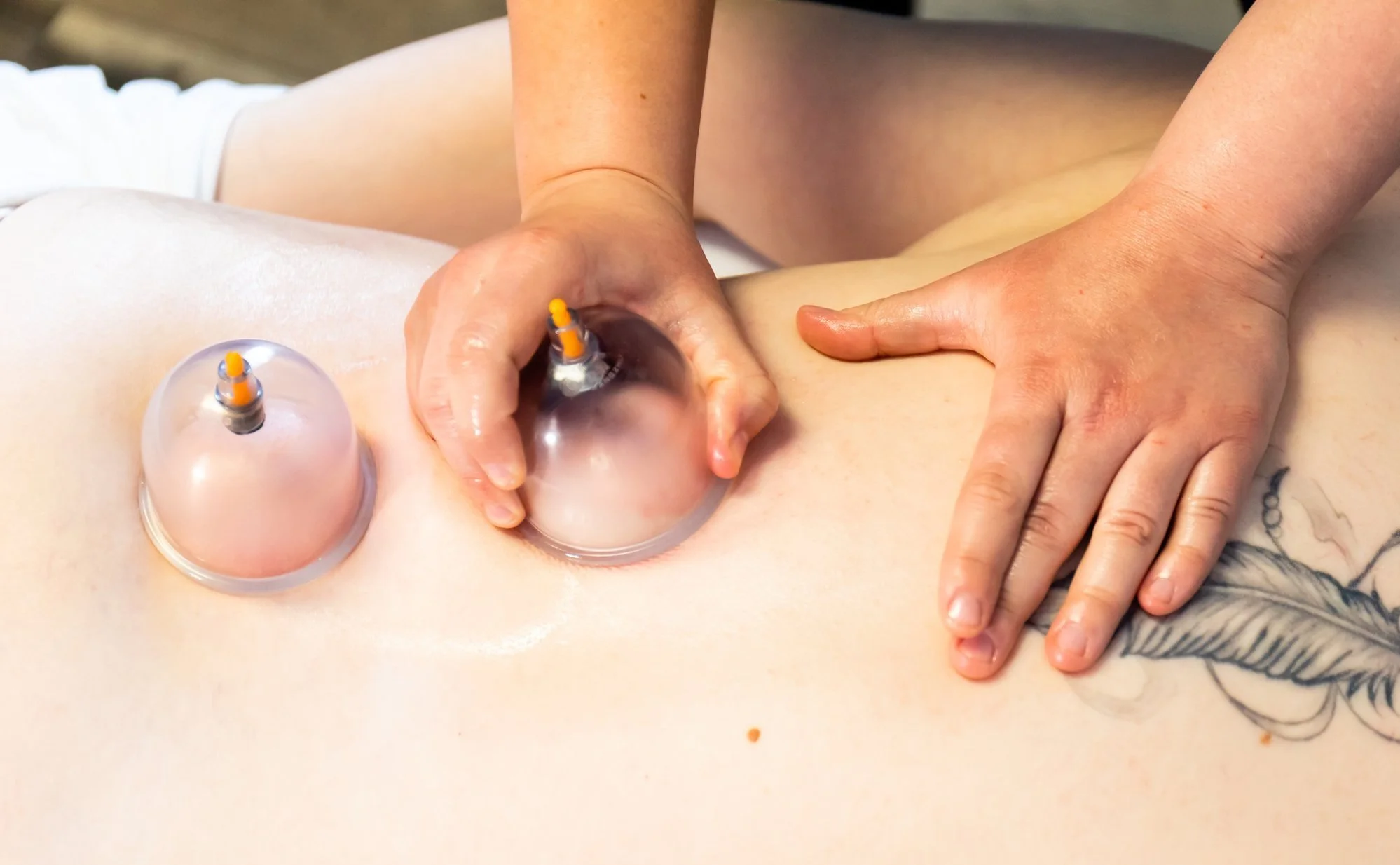
Oil or lotion is applied, and the cup is moved slowly across the skin. Many clients experience this as a deep, pulling version of cupping massage. It can feel especially effective for broader areas like the back and legs.
Massage and cupping combined
A session may start with hands-on work, add cupping, then return to massage. This approach is popular because it can address tension from two directions, pressure and lift. If you like firm work, this can pair well with techniques commonly used in Deep Tissue Massage when appropriate for your body and goals.
Hot cupping
Hot cupping uses heated glass cups to create suction. Some clients love the warmth. Others prefer silicone or pumped cups. The best method is the one that suits your body and comfort.
Why Do Cupping Marks Appear?
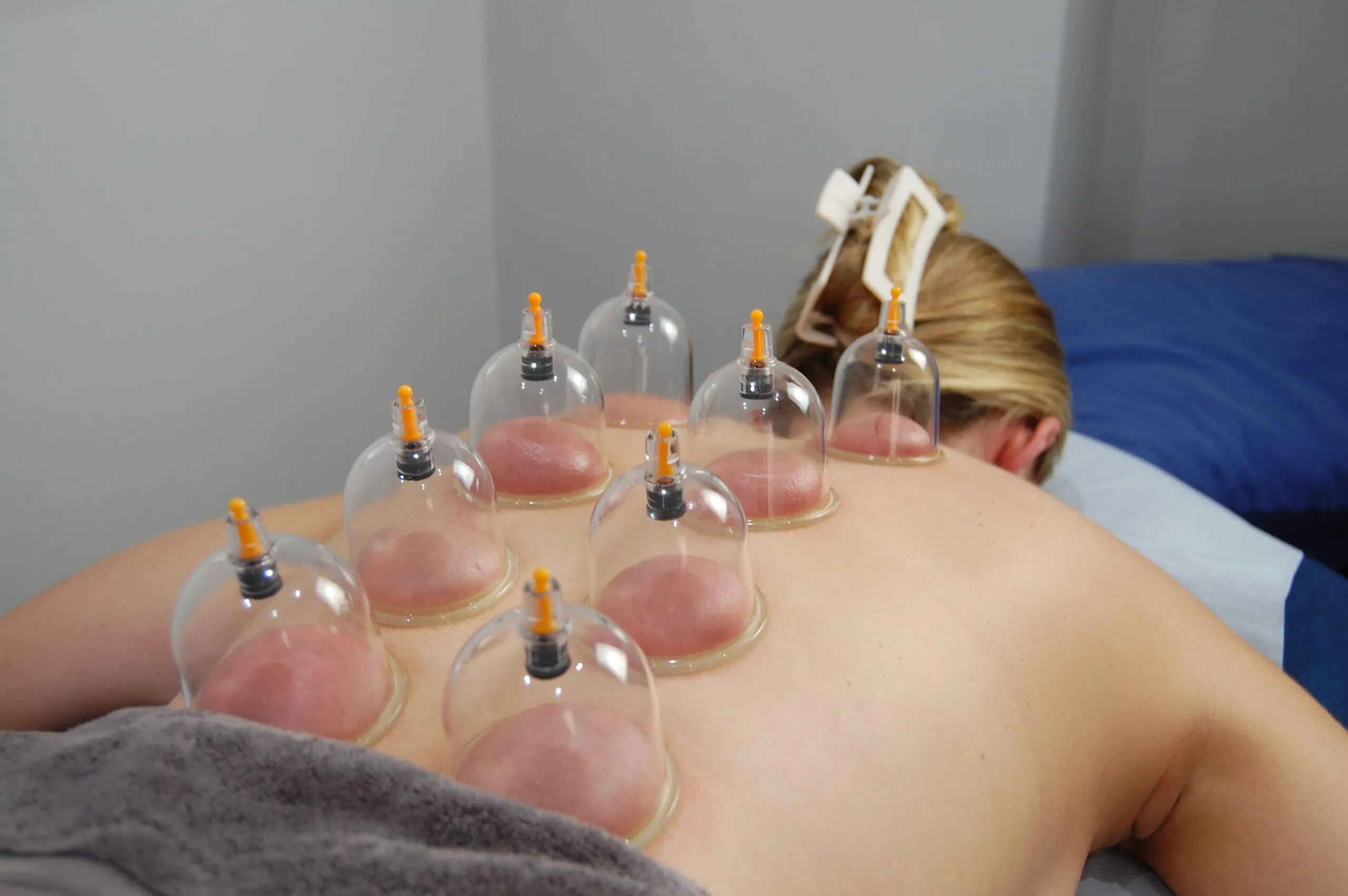
To begin with, cupping marks are one of the most talked-about parts of cupping therapy, and they often cause unnecessary worry. In most cases, marks are a temporary discoloration caused by suction drawing blood toward the surface. Although they can look like bruises, many people find they don’t feel tender the way a true bruise does. According to Cleveland Clinic, cupping can cause bruising and risks are generally low when performed properly; however, skin irritation or infection is possible.
How long do marks last?
Typically, this varies. Some fade within a few days, while others can take a week or more depending on skin sensitivity, suction level, and the area treated. (This range is commonly noted in clinical explanations of cupping marks.)
Are darker marks better?
Not necessarily. Darker marks can occur due to stronger suction, longer cup time, or a more reactive area. Ultimately, a skilled provider aims for the right therapeutic effect—not the darkest mark.
Planning around events
If so, and you have an event coming up—or you simply prefer minimal marking—be sure to mention it before your cupping therapy treatment begins.
Common Reasons People Choose Cupping Therapy
People book cupping therapy for a variety of goals, often related to tension and recovery.
Tight shoulders and upper back tension
Desk posture and stress commonly load the upper back and shoulders. Cupping is often used here when muscles feel constantly tight.
Stiffness and restricted movement
Some clients notice improved ease of movement after a session, especially when tightness feels like it is limiting range of motion.
Athletic recovery support
Many active clients include cupping therapy in their recovery routine. It is not a replacement for rest, but it can help the body feel less heavy and more mobile.
Stress-related bracing
Stress often shows up physically through clenching and guarding. A well-paced cupping massage can feel calming, particularly when paired with a relaxation-focused approach such as Relaxation Massage.
What to Expect During a Cupping Therapy Treatment
If you are booking your first cupping therapy treatment, here’s what a professional session often includes.
1) Short intake and goal check
You’ll discuss what you’re feeling, what areas feel tense, and what you want from the session, relaxation, recovery, or targeted tension relief.
2) Preparation of the area
Many sessions include massage first to warm tissue. This is a common reason people enjoy massage and cupping together.
3) Cup placement or movement
The therapist places cupping cups on selected areas or glides them over the skin with oil. You’ll feel a pulling sensation. It can feel strong, but it should not feel sharp or alarming.
4) Check-ins and adjustments
A good provider checks your comfort regularly. Suction can be reduced, cups can be repositioned, and timing can be adjusted.
5) Finish and aftercare tips
Some people feel energized after cupping therapy, others feel sleepy. Both can be normal. You may be encouraged to hydrate, keep activity light if the session was intense, and use gentle movement to maintain the “looser” feeling.
If you want to explore booking or speaking with the clinic, you can use the Booking page to ask for the best session type for your goals.
Does Cupping Therapy Hurt?
For most people, cupping therapy feels intense in a “good” way rather than painful. You should speak up if you feel sharp pain, burning, numbness, or tingling. Those signals usually mean suction needs to be adjusted or a different technique should be used.
Safety Notes: Who Should Avoid Cupping?
Cleveland Clinic and NCCIH both note that cupping can cause side effects like bruising and skin irritation, and it may not be suitable for everyone.
You should avoid cupping or get medical guidance first if you have:
- A bleeding disorder or you are on blood thinners
- Fragile skin, open wounds, or active skin infections
- Certain vascular issues in the area
- Recent surgery near the treatment site
If you are unsure, ask before booking. A reputable provider will screen and adapt.
Choosing the Right Cupping Therapy Near Me
When you search cupping therapy near me or cupping near me, focus on signs of professionalism:
- Clear explanations of what they do and why
- Hygiene and clean equipment
- Willingness to customize suction intensity
- Comfort-focused communication and check-ins

Written By: Vadzim Siniauski
Vadzim Siniauski is Certified Osteopathic manual practitioner DOMP, MCIO, and Registered Massage Therapist (RMT), MD (Belarus). Vadzim has an extensive experience in musculoskeletal health, pain management, and manual therapy techniques.
Our Editorial Process
At Body & Mind Osteopathic Clinic, we publish practical, experience-based content to help educate readers on osteopathy, rehabilitation, and wellness.
Writing: All our content is developed by experienced osteopathic practitioners and RMTs. It draws on reputable scientific literature, clinical research, and our real-world experience working with conditions such as back pain, joint stiffness, postural imbalances, and injury recovery.
Editing: Each article is reviewed internally by a senior practitioner to ensure accuracy, clarity, and alignment with our treatment protocols and patient education standards.
Verified by Practitioners: Before publication, content is verified by a licensed member of our clinical team to confirm that the medical information provided aligns with current best practices in manual therapy and osteopathic care.
Frequently Asked Questions
Is cupping therapy the same as deep tissue massage?
No, cupping therapy and deep tissue massage work in very different ways, even though they are often used together. Cupping therapy uses lift, also called negative pressure, to gently pull the skin and superficial tissues upward. Deep tissue massage, on the other hand, uses direct pressure and slow compression to work into deeper muscle layers.
What is the difference between hot cupping and regular cupping?
Hot cupping uses heat inside a glass cup to create suction before placing it on the skin. As the air inside cools, suction forms. Other cupping methods create suction using silicone cups or a hand pump, without heat.
The difference is mainly in how the suction is created and how it feels. Some people enjoy the warmth and sensation of hot cupping, while others prefer silicone or pump-based cupping because it allows more precise control of pressure and movement. According to the National Center for Complementary and Integrative Health (NCCIH), both approaches are used in practice, and the choice often depends on practitioner training, client comfort, and the area being treated.
Are the marks from cupping therapy dangerous?
Cupping therapy marks are not dangerous. These circular marks are a normal response caused by suction drawing blood to the surface. They typically fade within 7 to 10 days and are not a sign of bruising or tissue damage.
What are the benefits of cupping therapy?
Cupping therapy improves blood circulation, reduces muscle tension, relieves pain, and supports recovery. As result, benefits of cupping also include improved range of motion and reduced inflammation in targeted areas.
Does cupping remove toxins from the body?
Cupping therapy helps remove toxins by stimulating lymphatic flow and increasing blood circulation. This process supports natural detoxification, allowing the body to eliminate waste more efficiently.